



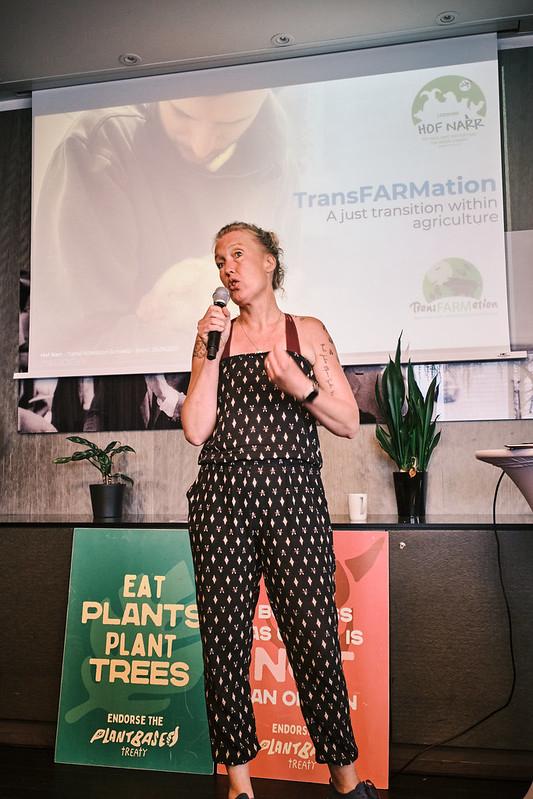
In a quiet corner of rural Switzerland, surrounded by green fields and slow mornings, a different kind of farming story is unfolding. It is not driven by production targets or profit charts, but by compassion,
responsibility, and a simple belief that animals deserve dignity. At the center of this quiet transformation stands Sarah Heiligtag, a farmer who chose to question everything she had been taught about agriculture and, in doing so, began reshaping its future.
What was once an ordinary livestock farm is now known as Hof Narr, a sanctuary where rescued animals live without fear or exploitation. Visitors arriving at the farm often expect a traditional agricultural setting. Instead, they find something that feels closer to a home. The atmosphere is calm. There is no rush, no noise, no pressure. Animals move freely, rest peacefully, and live at their own pace.
Heiligtag’s journey did not begin as activism. It began with observation. While working with animals every day, she started to see them differently. They were no longer units of production or numbers in a system. They were individuals with emotions, personalities, and a clear desire to live. That realization led her to ask a difficult but honest question: what if farming did not have to harm anyone?
The answer slowly took shape through action rather than protest.
Today, more than one hundred rescued animals call Hof Narr their home. Pigs sleep comfortably on warm straw. Cows roam open pastures without chains or stress. Chickens explore the grass under the sun. For many of these animals, it is the first time they have experienced safety. They are not valued for output or efficiency. They are simply allowed to exist.
The emotional impact on visitors is often unexpected. Families, students, and even traditional farmers walk through the gates out of curiosity and leave with a new perspective. Children naturally connect with the animals. Adults begin to question long-held assumptions about food systems and farming practices. Rather than convincing people through debate, the farm changes minds through experience. Seeing animals treated with care creates a deeper understanding than any argument could.
Heiligtag has expanded this philosophy beyond her own land. Through her “TransFARMation” initiative, she supports farmers across Europe who want to move away from livestock-based systems and explore plant-based, ethical, and sustainable alternatives. Her goal is practical as well as compassionate. She believes that farmers should not have to choose between earning a living and doing what feels right. In her view, kindness and sustainability can coexist with financial stability.
What makes her work stand out is its quiet nature. There are no dramatic campaigns or loud protests. Instead, change happens through example. A farmer sees that another model works. A family experiences a new way of thinking. Step by step, attitudes shift.
For Heiligtag, success is measured in small moments rather than recognition. A rescued calf trusting a human touch. A child learning empathy without being taught. A farmer saying, “I didn’t know this was possible.” These moments, she believes, matter more than awards or headlines.
At a time when global agriculture faces increasing questions about ethics, sustainability, and environmental impact, Hof Narr offers a living alternative. It demonstrates that farming can be productive without being cruel, and that progress does not always require louder voices, only braver choices.
In the end, Sarah Heiligtag’s work is not just about saving animals. It is about redefining humanity’s relationship with them. And in doing so, she is quietly proving that the future of farming may not lie in doing more, but in caring more. 🌿