



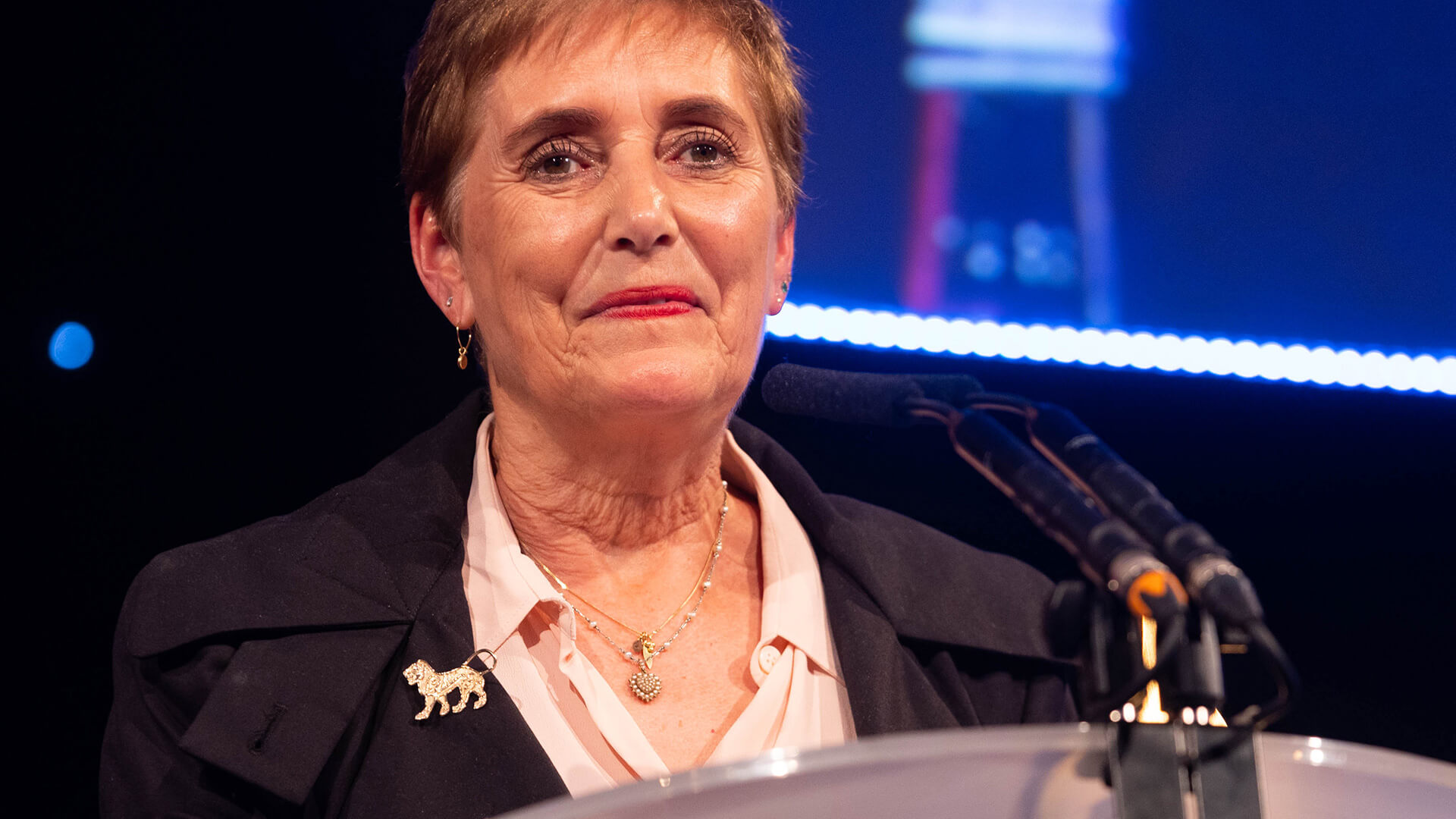
In a media landscape too often dominated by polarization, culture wars, and superficial soundbites, Nesrine Malik offers a sharp, ethical, and intellectual alternative. A columnist at The Guardian, Malik has emerged as one of Britain’s most incisive commentators on race, identity, politics, and power. Her work is more than opinion — it’s a consistent act of deconstruction: dismantling harmful myths, exposing systemic bias, and elevating conversations about what kind of country Britain really is — and what it could become.
Born in Sudan, raised in multiple countries, and educated at the University of London and Sciences Po in Paris, Malik brings a rare internationalism to British media. Her perspective is grounded not just in politics, but in lived experience — as a Muslim woman of colour navigating institutions that are rarely neutral and often hostile.
Since joining The Guardian, Malik has become known for challenging Britain’s comfort with its colonial past, its narratives of exceptionalism, and its failure to reckon honestly with racism, classism, and inequality. Her writing is clear-eyed and courageous — the kind of journalism that doesn’t merely critique but insists on accountability.
This article explores Nesrine Malik’s battle against toxic narratives in Britain — how she dissects them, why they persist, and how her voice has become a moral compass in a shifting, often disorienting, public discourse.
1. A Voice Forged Across Borders (300 words)
Nesrine Malik’s journalism is deeply influenced by her global upbringing. Born in Khartoum, she moved between Kenya, Egypt, and Saudi Arabia before settling in the UK. This border-crossing upbringing gave her a critical eye — attuned to how power operates across cultures and how narratives are used to justify inequality, not just in one country but globally.
Her early professional background wasn’t in media. Malik initially worked in finance, but her writing talent — and her passion for confronting dominant assumptions — soon brought her into journalism. What set her apart wasn’t just her heritage or education, but her approach: she wrote not from the sidelines of British life, but from within it — bringing both detachment and deep familiarity.
Malik didn’t ask for permission to critique Britain’s institutions — she just did. And in doing so, she broke a mold. At a time when most mainstream columnists were white and male, and Muslim women were either ignored or framed as “issues” to be debated, Malik wrote columns that made her readers reconsider their comfort zones.
Whether discussing Brexit, immigration, or Islamophobia, Malik refused to accept the framing often used by legacy media — where the “centre” is assumed to be white, secular, and economically secure. She wrote with clarity, wit, and a kind of controlled outrage — never reactive, always deliberate.
It’s this transnational lens and refusal to conform that makes Malik a moral outlier in British media. She brings perspective: not only can she see what’s wrong — she can also explain why it happens, how it persists, and what it costs society.
2. Dismantling the Myth of British Exceptionalism (300 words)
One of Nesrine Malik’s most powerful recurring themes is her critique of British exceptionalism — the belief that Britain is uniquely fair, tolerant, and civilised. It’s a myth deeply embedded in public consciousness, often reinforced by politicians and the media alike. Malik challenges this narrative head-on.
In column after column, she unpacks how this self-image prevents the UK from honestly engaging with its imperial history, its ongoing racism, and its treatment of migrants and minorities. She argues that this exceptionalism isn’t just misleading — it’s dangerous. It provides cover for policy failures, fuels denialism, and inhibits reform.
Malik has written extensively about how Brexit was marketed as a return to a “great” Britain — one unburdened by multiculturalism or international obligations. She has shown how anti-immigrant sentiment was often couched in nostalgic, misleading rhetoric about sovereignty and identity. And she has highlighted how this denial of history allows racism to be reframed as patriotism.
Her work is not just intellectual argument; it’s grounded in experience. She has spoken and written about how this narrative excludes people like her — Black and brown Britons who are repeatedly asked to prove their belonging, no matter how long they’ve lived in the country.
Through her writing, Malik reclaims the right to critique Britain as an act of civic duty. She reminds readers that love of country is not measured in silence or obedience — but in a demand for honesty and justice. Her columns become a mirror, reflecting back the contradictions and blind spots Britain is too often unwilling to face.
3. Tackling Islamophobia and the Politics of Fear (300 words)
Nesrine Malik has been one of the UK’s most prominent voices challenging Islamophobia — not just in policy, but in narrative. She doesn’t only report on anti-Muslim hate; she interrogates the frameworks that normalize suspicion, control, and dehumanization of Muslims in British life.
Her work reveals how Islamophobia is embedded in subtle language choices, media tropes, and political framing. From Boris Johnson’s infamous “letterbox” comments to the securitization of Muslim communities through Prevent, Malik dissects how Muslims are constructed as perpetual outsiders — people to be managed, questioned, or feared.
But she doesn’t stop at right-wing populism. Malik also critiques liberal complicity — the way some progressive circles engage in “soft Islamophobia” through patronising narratives or by expecting Muslims to constantly denounce extremism to be accepted.
Her own visibility as a Muslim woman in journalism makes her a frequent target of online abuse. Yet, rather than retreat, she uses her platform to deepen the conversation. She insists that representation without reform is hollow — and that the fight against Islamophobia must include a transformation of how Muslims are discussed and portrayed.
Malik has also written powerfully about the emotional toll of being Muslim in Britain — the exhaustion of navigating spaces that are not made for you, the daily calculations of speech and dress, the quiet traumas of being seen as a threat.
In doing so, she expands the conversation. Islamophobia, in her hands, becomes not just a civil rights issue, but a media ethics issue, a political integrity issue, and a national identity issue. Her work calls for more than tolerance; it demands change.
4. The Cost of Speaking Truth: Pushback, Harassment, and Resilience (300 words)
With moral clarity comes public cost. Nesrine Malik’s refusal to self-censor — to tell only the palatable version of her truth — has made her a target. She’s faced online threats, racist abuse, and attempts at professional discrediting. Yet she continues.
Malik has written about the hostility she receives — how her inbox fills with vitriol whenever she publishes on race, gender, or Islam. The abuse is not just ideological; it is deeply personal and dehumanizing, aimed at silencing her voice and others like hers.
But Malik refuses to be reduced to a victim. She confronts the hatred with strategic clarity. She sees the backlash as part of the narrative itself — a symptom of the very denial and toxicity she critiques.
She also speaks out about how the industry enables such backlash. From social media platforms that fail to moderate abuse to newsroom cultures that still centre whiteness, Malik points out that journalism is not neutral terrain. Writers of colour, especially women, are expected to be grateful for space — but not too loud, not too critical, not too radical.
Malik pushes back against these expectations. She does not “play nice” to preserve access. She doesn’t soften her critiques for respectability. In doing so, she models what intellectual courage looks like in practice.
Her continued presence in mainstream media, especially in an outlet like The Guardian, is itself a form of resistance. It signals to other writers — and to readers — that principled dissent has a place. And that the costs of truth-telling, while real, are worth bearing.
5. We Need New Stories: Beyond Critique, Toward Reconstruction (300 words)
In 2019, Nesrine Malik published her acclaimed book We Need New Stories: Challenging the Toxic Myths Behind Our Age of Discontent. It was more than a collection of essays — it was a manifesto. The book outlined six core myths dominating public discourse: about freedom of speech, meritocracy, national greatness, political correctness, and more.
Malik argued that these myths are not harmless ideas — they are tools of suppression. They justify inequality, prevent reform, and delegitimize those who call for change. In her analysis, the real crisis in Britain isn’t about “wokeness” or “cancel culture” — it’s about narrative control.
We Need New Stories was widely praised for its clarity and courage. But more than that, it gave people language. It helped readers name what they’d long sensed but couldn’t articulate: that many of the stories they’d been told were serving someone else’s comfort, not their truth.
What’s powerful about Malik’s approach is that she doesn’t stop at critique. She asks: What next? If these myths are failing, what stories do we need to tell instead?
Her vision includes new narratives about solidarity, intersectionality, historical reckoning, and shared futures. She imagines a Britain that sees difference not as threat but as possibility. One where equality isn’t a PR goal, but a structural priority.
This forward-looking posture sets Malik apart. She is not just exposing injustice — she’s laying the groundwork for a new ethical framework in media and politics. One rooted in dignity, accuracy, and compassion.
Conclusion (200 words)
Nesrine Malik has emerged as one of Britain’s most essential public intellectuals — not by being the loudest, but by being the clearest. Her journalism cuts through distortion. It interrogates the stories Britain tells about itself and asks whether those stories serve the many or protect the few.
Through her columns at The Guardian, her public speaking, and her writing in We Need New Stories, Malik has become a moral compass in an era of confusion. She doesn’t claim perfection or ideological purity — but she insists on honesty. She insists that truth matters. That voices matter. That history matters.
In confronting toxic narratives, Malik offers not only resistance but restoration. Her work reminds us that journalism, at its best, is not just about reporting what is — it’s about imagining what could be. It’s about giving the public not only information, but insight.
In a time when cynicism often masquerades as wisdom, Nesrine Malik gives us something else: the courage to hope, to act, and to believe that better stories — and better systems — are possible.
She writes not for applause, but for change. And in doing so, she gives British journalism exactly what it needs most: a conscience.